10 Things to Know How a Reverse Mortgage Works (Plus 3 Bonus Tips for Absolute Transparency)
Cut through the retail sales pitch with a complete, transparent breakdown of how HECM reverse mortgages actually work, what fees to watch out for, and how our zero-junk-fee model protects your equity.
10 Things to Know How a Reverse Mortgage Works (Plus 3 Bonus Tips for Absolute Transparency)
For many older homeowners, a reverse mortgage—specifically a Home Equity Conversion Mortgage (HECM)—is one of the most powerful financial instruments available for retirement planning. Yet, it is also one of the most misunderstood. Because reverse mortgages have historically received a bad reputation due to predatory lenders, high hidden fees, and aggressive sales tactics, many consumers don't know where to start or who to trust.
When you strip away the corporate retail bloat, high origination margins, and junk fees, a reverse mortgage is simply a financial tool designed to convert a portion of your home equity into tax-free cash flow—without ever having a required monthly mortgage payment, as long as you maintain the property, pay your property taxes and homeowner’s insurance, and live in the home as your primary residence.
As an independent wholesale mortgage broker committed to a 100% transparent, zero-junk-fee LEAN model, my goal is to give you complete clarity on how these loans work, what to look out for, and how to secure the best terms possible.
Here are the 10 essential things you need to know about how a reverse mortgage works, followed by 3 crucial bonus tips.
1. What Exactly Is a Reverse Mortgage (HECM)?
A reverse mortgage is a special type of home loan for homeowners aged 62 and older. Unlike a traditional forward mortgage where you make monthly payments to the bank to pay down your balance, a reverse mortgage does the opposite. The lender advances loan proceeds to you based on your home equity.
- The Payment Structure: You are not required to make monthly principal and interest payments on the loan.
- The Balance: Instead, the loan balance grows over time as interest and fees are added to the principal balance.
- Ownership: You retain the title and ownership of your home for the entire duration, just like a traditional mortgage.
2. Who Qualifies? (Age, Equity, and Property Types)
To qualify for an FHA-insured HECM reverse mortgage, you must meet specific federal guidelines:
- Age Requirement: The youngest borrower on the title must be at least 62 years old.
- Equity Threshold: You must own your home outright or have a significant amount of equity (typically 50% or more) that can be used to pay off any existing mortgage balance at closing.
- Eligible Properties: Single-family homes, 2-to-4-unit properties (where you live in one unit), FHA-approved condominiums, and manufactured homes that meet strict FHA permanent-foundation standards.
- Financial Assessment: Lenders evaluate your residual income and credit history to ensure you have the ongoing capacity to pay property taxes, hazard insurance, and HOA dues.
3. How Property Values and Principal Limits Determine Your Funds
You cannot borrow 100% of your home’s value. The maximum amount you can borrow—known as the Principal Limit—is determined by a strict formula dictated by HUD/FHA guidelines:
- The Age of the Youngest Borrower: The older you are, the higher percentage of your home's equity you can access.
- Current Interest Rates: Lower interest rates yield higher principal limits; higher rates reduce available proceeds.
- The Maximum Claim Amount: Based on the appraised value of your home or the current FHA HECM lending limit (whichever is lower).
Example: If your home is valued at $600,000 and you are 70 years old, your principal limit might give you access to roughly 45% to 50% of that value ($270,000 to $300,000), depending on prevailing interest rates. If you have an existing forward mortgage of $100,000, that balance must first be paid off at closing from your available proceeds, leaving the remainder available for your use.
4. Flexible Distribution Options (Lump Sum, Line of Credit, or Monthly)
One of the greatest features of a HECM is how customizable the disbursement is. You can choose how you receive your funds based on your retirement cash flow needs:
- Line of Credit (The Growth Feature): You can place your available funds into a line of credit. The unused portion of this line of credit actually grows in size over time, giving you access to more capital as you age.
- Monthly Term or Tenure Payments: You can receive fixed monthly cash distributions for a specific number of years (term) or for as long as you live in the home (tenure).
- Lump Sum: You can take a single disbursement at closing (subject to initial disbursement caps set by FHA rules, especially during the first 12 months).
Example of Monthly Distributions: If you set up a tenure payment plan based on your available principal limit, you could receive a steady, tax-free monthly deposit of $1,200 to $1,800 per month directly into your bank account to supplement your Social Security or pension, completely tax-free.
5. What Happens When You Pass Away? (Do Heirs Keep the Home?)
This is the number one concern for families looking at reverse mortgages: Will the bank take the house, and what happens to our children?
- Non-Recourse Protection: A HECM is a non-recourse loan. This means that when the last surviving borrower passes away or permanently leaves the home, neither you nor your heirs will ever owe more than the home is worth—even if the loan balance exceeds the home's market value.
- Options for Heirs: When you pass away, your heirs or estate are given time (typically 6 months, with possible extensions up to 12 months) to handle the property. They have three choices:
- Refinance the Home: Pay off the reverse mortgage balance (which is capped at 95% of the appraised value) with a traditional mortgage or cash to keep the property.
- Sell the Home: Sell the property on the open market, pay off the reverse mortgage, and keep 100% of the remaining equity.
- Deed in Lieu: Sign the deed over to the lender if the balance exceeds the value, with zero personal liability or negative impact on other family assets.
6. You Still Must Maintain Property Obligations
A common misconception is that once you get a reverse mortgage, you have no bills left regarding the house. That is false. To avoid technical default and keep the loan in good standing, you are legally required to:
- Pay Property Taxes: Keep all local property taxes current.
- Maintain Homeowner’s Insurance: Keep hazard and, if applicable, flood insurance active at all times.
- Pay HOA Dues: Keep up with any mandatory community or condominium association fees.
- Maintain the Property: Keep the home in reasonable, habitable physical condition.
7. Mandatory HUD Counseling Protects You
Before you can even submit an application for a HECM reverse mortgage, federal law requires you to complete a counseling session with an independent, HUD-approved third-party counselor.
- This counseling session is designed purely for your protection.
- It ensures you completely understand the financial implications, costs, alternatives, and obligations of the loan without any sales pressure from a lender.
8. Beware of "Junk Fees" and High Retail Margins
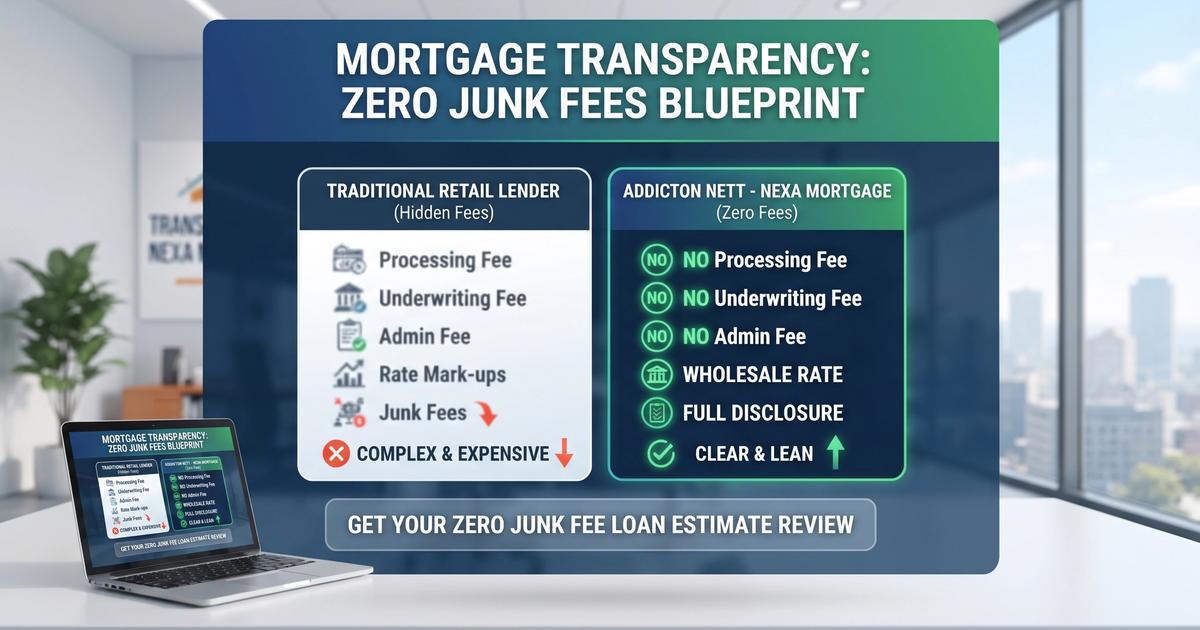
Because reverse mortgages involve complex government insurance and specialized underwriting, traditional retail lenders often use them as a vehicle to stack massive administrative fees, excessive origination margins, and hidden lender charges into the loan estimate.
- The Retail Trap: Many big-name retail lenders charge the maximum allowable origination fee while sneaking in extra processing and underwriting fees.
- The LEAN Wholesale Difference: As an independent broker, I operate on a zero-junk-fee model. I do not charge processing or administrative fees, allowing you to retain thousands of dollars in equity that would otherwise be lost to corporate overhead.
9. Upfront and Ongoing Costs Explained
Like any mortgage, a reverse mortgage has associated closing costs, which can be financed directly into the loan balance so you don't have to bring cash out of pocket to close:
- FHA Mortgage Insurance Premium (MIP): An upfront fee (typically 2% of the maximum claim amount) plus an annual ongoing MIP (0.5% of the loan balance) that guarantees the non-recourse protection.
- Origination Fee: Compensates the lender for processing the loan (regulated by FHA caps based on home value).
- Third-Party Fees: Appraisal, title, escrow, recording, and credit report fees.
10. Refinancing Potential Down the Road
Just like a traditional mortgage, a reverse mortgage is not necessarily a permanent life sentence. If home values rise significantly in your local market or prevailing interest rates drop substantially in the future, you can explore refinancing your HECM into a new reverse mortgage to unlock additional available equity or secure better terms.
3 Bonus Tips for Navigating a Reverse Mortgage Like a Pro
Bonus Tip #1: Utilize the Line of Credit Growth Rate
If you don't need all your cash upfront, choose the Line of Credit option rather than a lump sum. The unused portion of a HECM line of credit features a government-guaranteed growth rate. If interest rates rise, your available credit line increases right along with them, acting as a powerful financial safety net for future healthcare or emergency expenses.
Bonus Tip #2: Compare Competing Loan Estimates Line-by-Line
Never choose a reverse mortgage lender based on a phone pitch or a flashy mailer. Demand a formal Loan Estimate (LE) and scrutinize Section A (Origination Charges). If another lender is charging a $2,500 "processing fee" or "underwriting fee" on top of their origination, walk away. Demand true zero-junk-fee wholesale transparency.
Bonus Tip #3: Involve Your Family Early
Even though the decision is entirely yours, bring your adult children or trusted heirs into the conversation early—ideally during or right after your HUD counseling session. When family members understand how the non-recourse protection works and how equity is preserved upon your passing, it eliminates anxiety and ensures everyone is aligned on your long-term retirement plan.
Ready for a Transparent, Zero-Obligation Review?
If you or an aging parent are exploring a reverse mortgage and want a clear, honest breakdown without the high-pressure sales tactics or hidden corporate fees of retail lenders, reach out today. Let's look at the numbers together and design a strategy that protects your home and maximizes your retirement freedom.
Addison Nett
Mortgage Loan Officer | NMLS #1542184
Licensed in AZ, ID, OR, WA, TX 📍
NEXA Mortgage LLC
📞 971-263-8140
✉️ anett@nexamortgage.com | AZ BANKER license number: BK-2006218
NEXA Mortgage | #1660690 | AZMB # 0944059
Equal Housing Opportunity
© 2026 NEXA Mortgage, LLC. NMLS #1660690 • AZBK-2006218 • Equal Housing Lender.